Scoliosis Surgery Cost in India

Advanced surgical correction for spinal curvature, restoring alignment and improving quality of life for patients with scoliosis.

Request a Free Quote
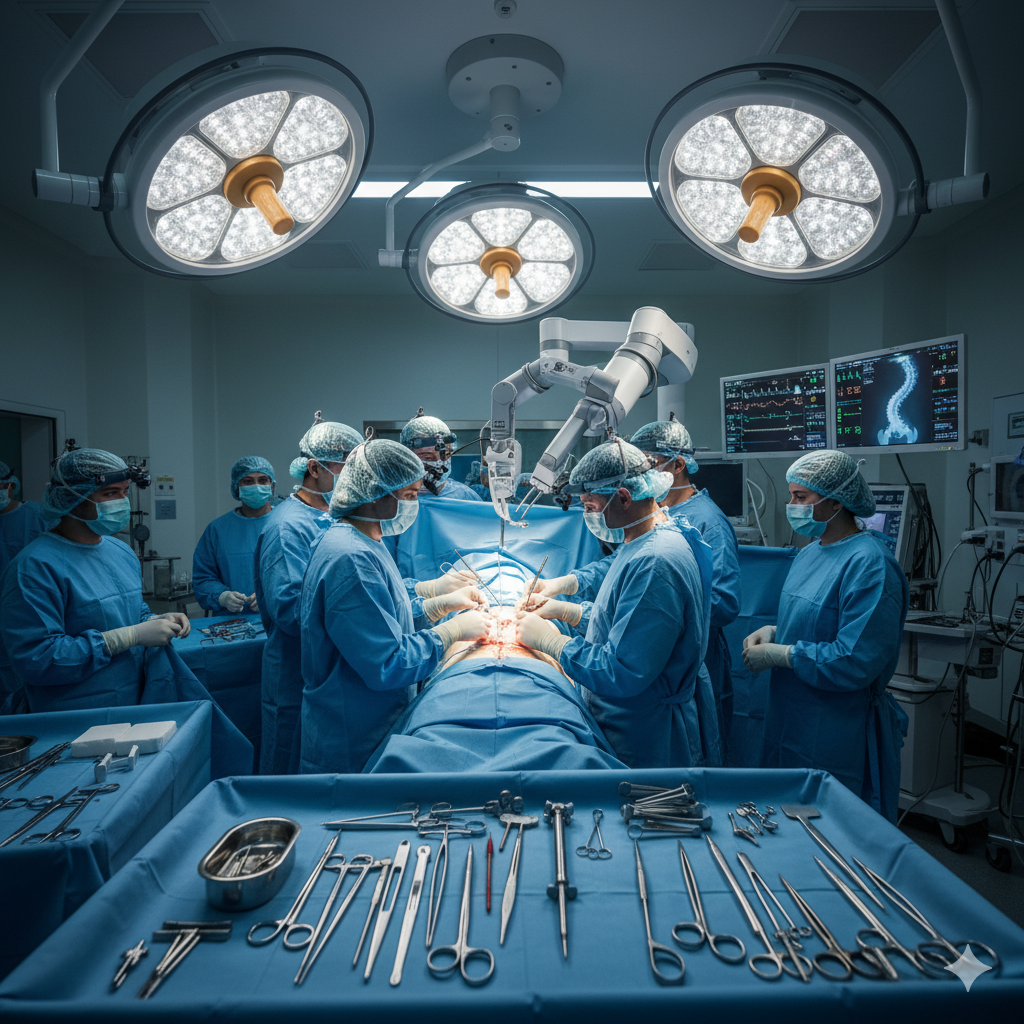
Scoliosis Surgery in India

About Scoliosis Surgery

Scoliosis surgery is a specialized procedure designed to correct abnormal curvature of the spine and prevent further progression. Using advanced instrumentation and fusion techniques, our spine deformity specialists can significantly improve spinal alignment and restore normal posture.

Our comprehensive approach includes detailed preoperative planning, state-of-the-art surgical techniques, and personalized rehabilitation to achieve optimal outcomes for both adolescent and adult scoliosis patients.

Key Benefits

Significant curvature correction
Prevention of curve progression
Improved spinal alignment and posture
Reduced pain and discomfort
Enhanced breathing capacity
Improved quality of life and mobility

Treatment Details

Comprehensive information about scoliosis surgery procedures, techniques, and specialized care.

Surgical Procedure

Scoliosis correction surgery involves carefully planned spinal fusion with instrumentation to straighten the curved spine and maintain correction. The procedure requires meticulous planning and execution to achieve optimal alignment while preserving neurological function.

1

Preoperative Planning

Detailed imaging analysis and surgical simulation using bending films and 3D modeling

2

Anesthesia & Positioning

General anesthesia with careful prone positioning and neurophysiological monitoring

3

Surgical Exposure

Posterior approach with careful dissection to expose the spinal elements

4

Instrumentation Placement

Precise placement of pedicle screws, hooks, or wires at multiple levels

5

Curve Correction

Gradual correction using rods and various reduction techniques

6

Spinal Fusion

Bone grafting and fusion completion to maintain permanent correction

Advanced Surgical Elements

  • Neuromonitoring: Continuous monitoring of spinal cord and nerve function
  • Navigation Systems: 3D image guidance for precise screw placement
  • Osteotomies: Strategic bone cuts for severe or rigid curves
  • Vertebral Column Resection: Complete vertebra removal for extreme deformities
  • Growing Rods: For young children to allow continued spinal growth

Surgical Decision Factors

  • Curve magnitude and progression rate
  • Patient age and skeletal maturity
  • Curve pattern and flexibility
  • Associated symptoms (pain, breathing difficulties)
  • Patient's overall health and lifestyle goals

Types of Scoliosis

Scoliosis is classified based on cause, age of onset, and curve pattern. Understanding the specific type is crucial for determining the appropriate treatment approach.

Idiopathic Scoliosis

Characteristics: Most common type, cause unknown, typically develops in adolescence

Subtypes:

  • Infantile (0-3 years)
  • Juvenile (4-10 years)
  • Adolescent (11-18 years)
  • Adult (after skeletal maturity)

Treatment Approach: Based on curve magnitude and progression risk

Congenital Scoliosis

Characteristics: Caused by vertebral abnormalities present at birth

Common Vertebral Defects:

  • Hemivertebrae (wedge-shaped vertebrae)
  • Vertebral bars (unilateral fusion)
  • Butterfly vertebrae
  • Block vertebrae

Treatment Approach: Early intervention often required, complex surgery

Neuromuscular Scoliosis

Characteristics: Associated with neurological or muscular conditions

Underlying Conditions:

  • Cerebral Palsy
  • Muscular Dystrophy
  • Spinal Cord Injuries
  • Spina Bifida
  • Friedreich's Ataxia

Treatment Approach: Often long fusions, special seating considerations

Degenerative Scoliosis

Characteristics: Develops in adulthood due to disc and joint degeneration

Common Features:

  • Typically occurs after age 40
  • Often associated with spinal stenosis
  • Progressive nature
  • Significant pain component

Treatment Approach: Focus on pain relief and stabilization

Curve Severity Guidelines

10° - 25°
Mild scoliosis - Observation and physical therapy
25° - 45°
Moderate scoliosis - Bracing considered in growing children
45°+
Severe scoliosis - Surgical correction typically recommended

Surgical Techniques

Various surgical techniques are available for scoliosis correction, each suited for specific curve patterns, patient ages, and deformity characteristics.

Posterior Spinal Fusion

Most Common Approach

Best for: Most adolescent idiopathic scoliosis, flexible curves

Advantages: Familiar approach, excellent correction, fewer complications

Anterior Spinal Fusion

Through Chest or Abdomen

Thoracolumbar curves, some lumbar curves

Advantages: Fewer fusion levels, better lordosis preservation

Anterior/Posterior Fusion

Combined Approach

Best for: Severe rigid curves, congenital scoliosis

Advantages: Maximum correction, highest fusion rates

Vertebral Body Tethering

Motion Preservation

Best for: Selected adolescent patients with growth remaining

Advantages: Preserves motion, growth modulation

Growing Rod Systems

For Young Children

Best for: Early-onset scoliosis before skeletal maturity

Advantages: Allows spinal growth, repeated lengthening

Magnetic Growing Rods

Non-invasive Lengthening

Best for: Young children requiring growth-sparing treatment

Advantages: No repeated surgeries for lengthening

Instrumentation Systems

  • Pedicle Screw Systems: Gold standard for most scoliosis corrections
  • Hook and Rod Systems: Traditional system, still used in specific cases
  • Hybrid Constructs: Combination of screws, hooks, and wires
  • Universal Clamp Systems: For vertebral body tethering
  • Custom Rods: Patient-specific contoured rods

Correction Techniques

  • Direct Vertebral Rotation: Rotational correction of vertebrae
  • Translation Maneuvers: Moving vertebrae into alignment
  • In-situ Bending: Rod contouring after placement
  • Compression/Distraction: Adjusting vertebral relationships
  • Osteotomies: Bone cuts for rigid curve release

Recovery & Outcomes

Recovery from scoliosis surgery is a gradual process that requires patience and commitment to rehabilitation. The outcomes are generally excellent with proper surgical technique and postoperative care.

Recovery Timeline

  • Hospital Stay: 4-7 days typically
  • Initial Recovery: 6-8 weeks with activity restrictions
  • Brace Use: 3-6 months if prescribed
  • Return to School/Work: 4-8 weeks for sedentary activities
  • Physical Therapy: Begins 6-12 weeks postoperatively
  • Return to Sports: 6-12 months with clearance
  • Full Recovery: 12-18 months for complete healing

Postoperative Guidelines

  • First 6 Weeks: Strict activity restrictions, no bending/lifting/twisting
  • Weeks 6-12: Gradual increase in walking and light activities
  • Months 3-6: Physical therapy focus on core strengthening
  • Months 6-12: Gradual return to normal activities and sports
  • Long-term: Regular exercise to maintain strength and flexibility

Expected Outcomes

  • Curve Correction: 60-80% average correction of major curves
  • Pain Relief: 80-90% significant improvement in pain
  • Fusion Success: 95%+ successful fusion rates
  • Patient Satisfaction: 85-95% report being satisfied with outcomes
  • Complication Rates: 5-10% depending on procedure complexity

Long-term Considerations

  • Regular follow-up visits for several years
  • Monitoring of adjacent segment health
  • Possible activity modifications for contact sports
  • Potential for minor loss of correction over time
  • Importance of maintaining healthy bone density

Risks and Complications

  • Neurological Injury: Rare with modern monitoring techniques
  • Infection: 1-3% risk with antibiotic prophylaxis
  • Hardware Failure: Rod or screw breakage in 2-5% of cases
  • Pseudarthrosis: Non-union requiring revision in 1-5%
  • Blood Loss: Significant but manageable with modern techniques

Cost Comparison

Significant savings on scoliosis surgery with world-class deformity specialists

Country Adolescent Scoliosis Adult Scoliosis* Hospital Stay Savings vs. USA
United States $150,000 - $300,000 $180,000 - $400,000 5-8 days -
India $9,800 - $16,000 $10,000 - $16,000 7-10 days 75-85%
Turkey $25,000 - $50,000 $32,000 - $75,000 7-10 days 72-82%
Egypt $23,000 - $48,000 $30,000 - $70,000 7-10 days 73-83%
Scroll horizontally to view full table

*Adult scoliosis packages may be higher due to additional medical complexity. All packages include surgery, hospital stay, implants, neuromonitoring, and comprehensive follow-up care.

Ready to Straighten Your Spine?

Contact us today for a comprehensive evaluation and personalized treatment plan. Our scoliosis specialists are here to help you achieve better spinal alignment and improved quality of life.

Request a Free Quote